

Luxury Interior Design Principles: 5 Ways to Let Your Architecture Guide Your Interiors

5 Essential Principles for Designing Interiors Inspired by Your Home’s Architecture
Every home tells an architectural story. The best interior design simply helps tell it better.
By: The Decorators Unlimited
Architect: Randall Stofft, Builder: Onshore Jupiter, Interior Design: The Decorators Unlimited, Designer: Jack Lonetto, Developer: Stuart Hankin, Photography: Hayley Ellen Day
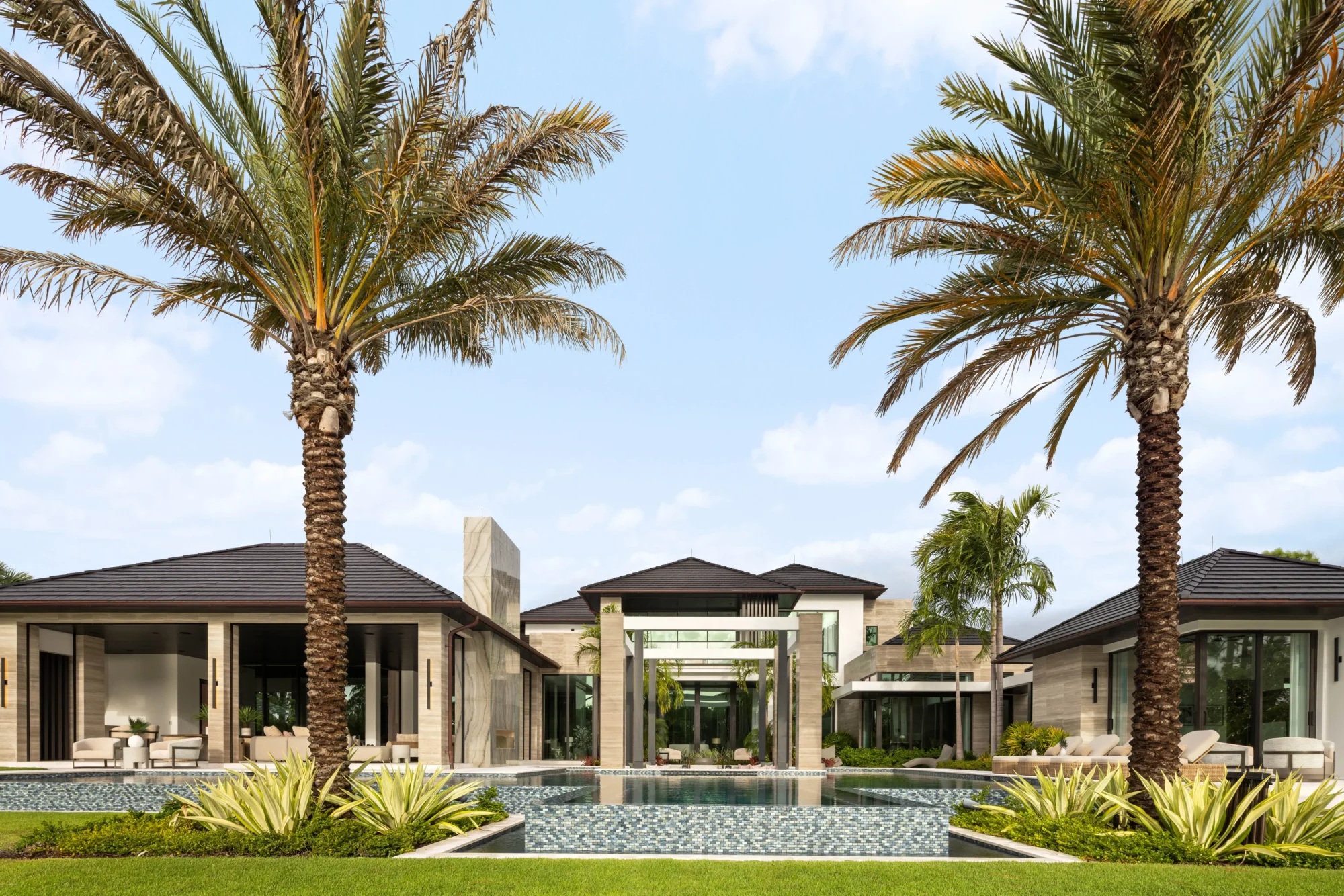
Our latest project, a 10,000 sq ft residence at the Bears Club
Five Guiding Principles: How Luxury Interior Design Complements Architecture
Every great home begins with a point of view. Your home was built with intentional proportions, materials, and style. When interior design honors that architectural vision, the result feels cohesive, timeless, and genuinely luxurious.
In exceptional homes, architecture and interiors work in perfect harmony. Let your architecture inspire your interior design with these five principles.
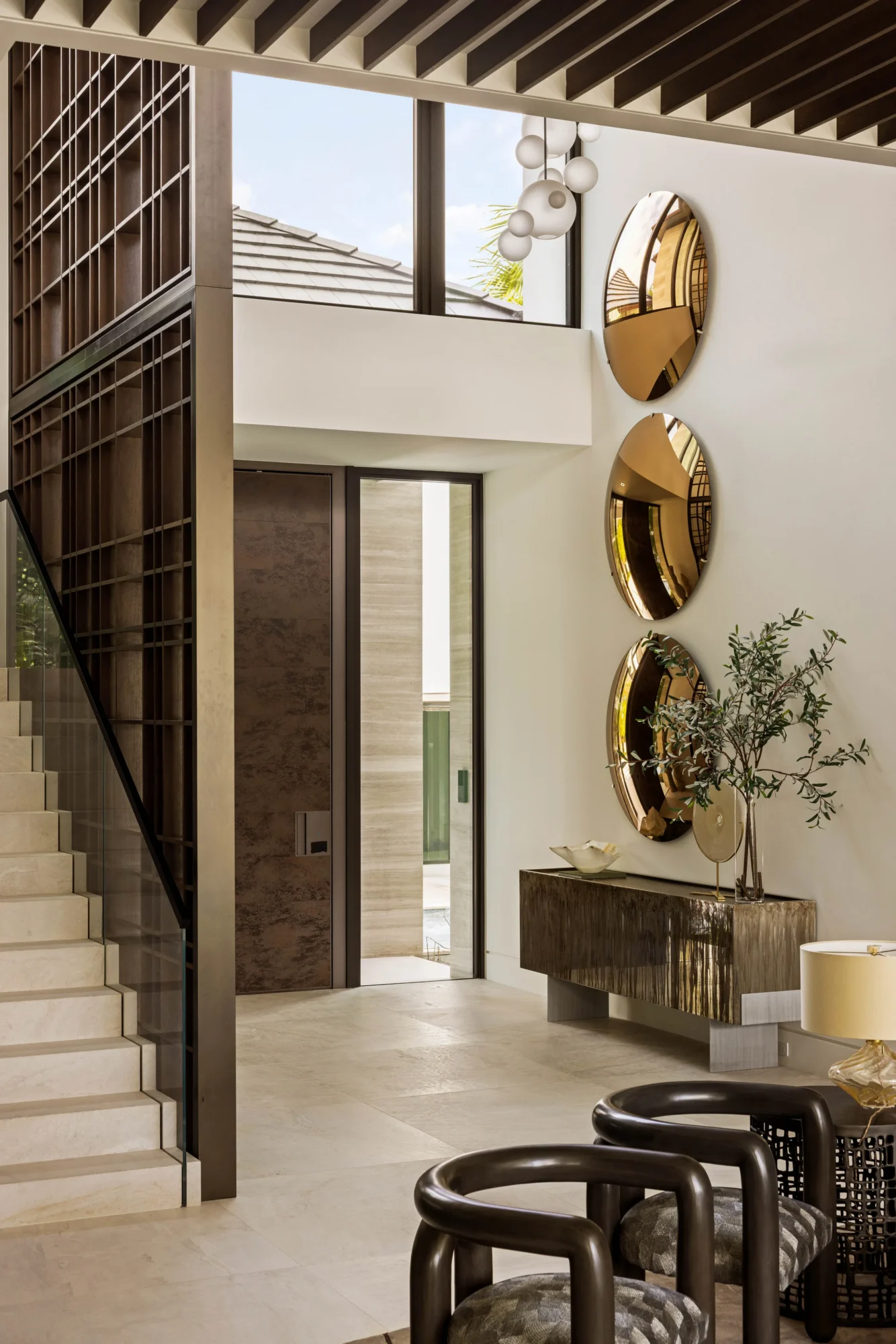
A series of mirrors accentuates the soaring height of the entry
1. Let the Architecture Lead
The first principle is also the most important: treat your home’s architecture as the lead collaborator, not a backdrop. Before selecting a single fabric or finish, take stock of what the house is already telling you. Note the architectural period, the materials used in its construction, the geometry of its openings, and how light moves through each space.
A home with soaring arched doorways invites handcrafted texture. A clean, modern residence calls for a refined edit of objects. When the interior takes its cues from the structure, guests immediately feel a sense of coherence.
True luxury design begins with disciplined restraint and a deep respect for architectural intention.
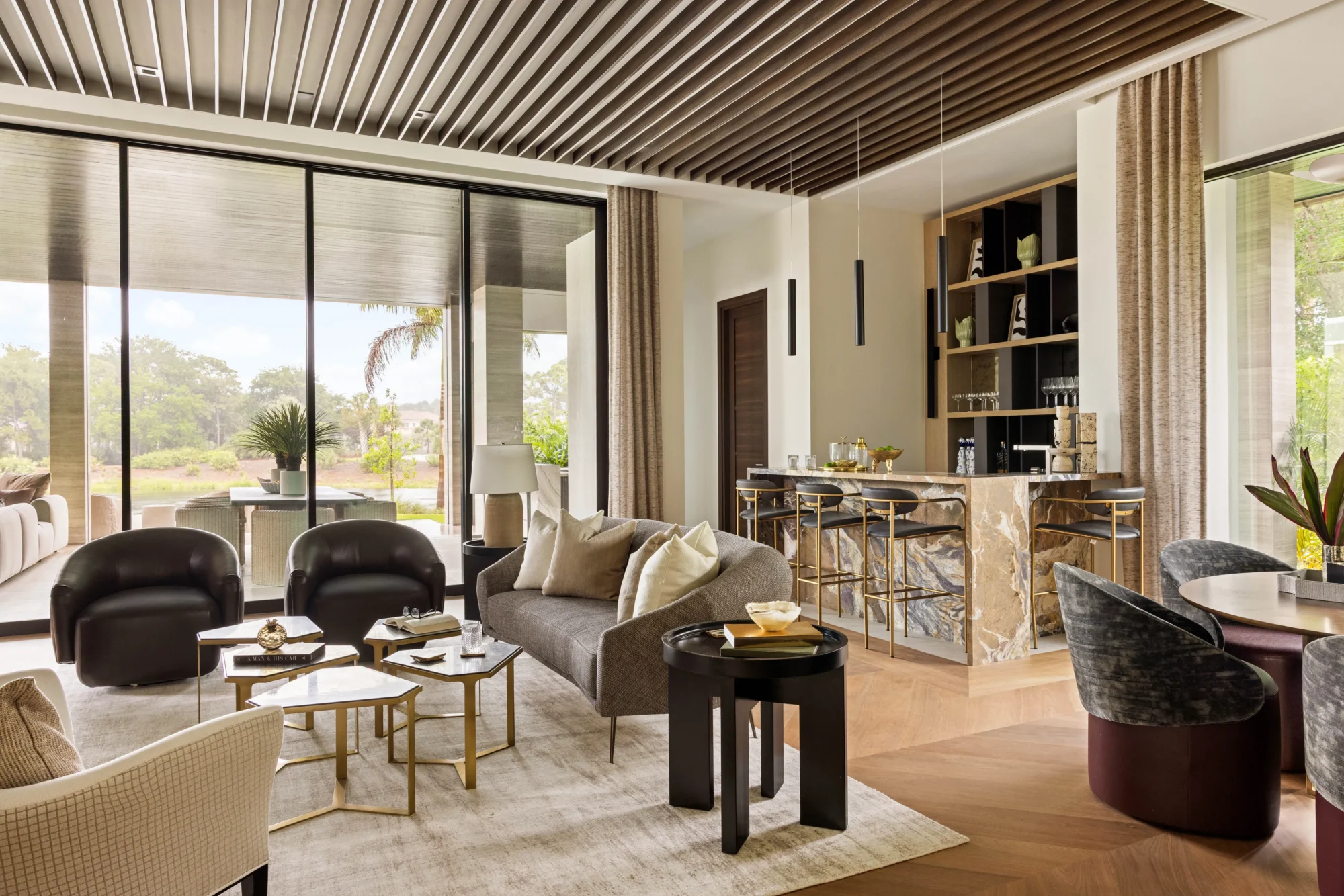
A bespoke marble bar is a focal point of the club room
2. Honor Scale and Proportion
At its heart, architecture is the art of proportion, and interiors must respect that. A grand double-height living room demands furnishings with presence: substantial seating, sculptural lighting, and art at a scale that holds its own against the volume. Conversely, an intimate library with a coffered ceiling rewards lower, more tailored pieces that preserve its cocooning character.
Common missteps include furniture too small for a generous room, leaving the space feeling unresolved, and oversized pieces in modest rooms, which crowd the very details that make them special. When scale is right, a room feels effortless.
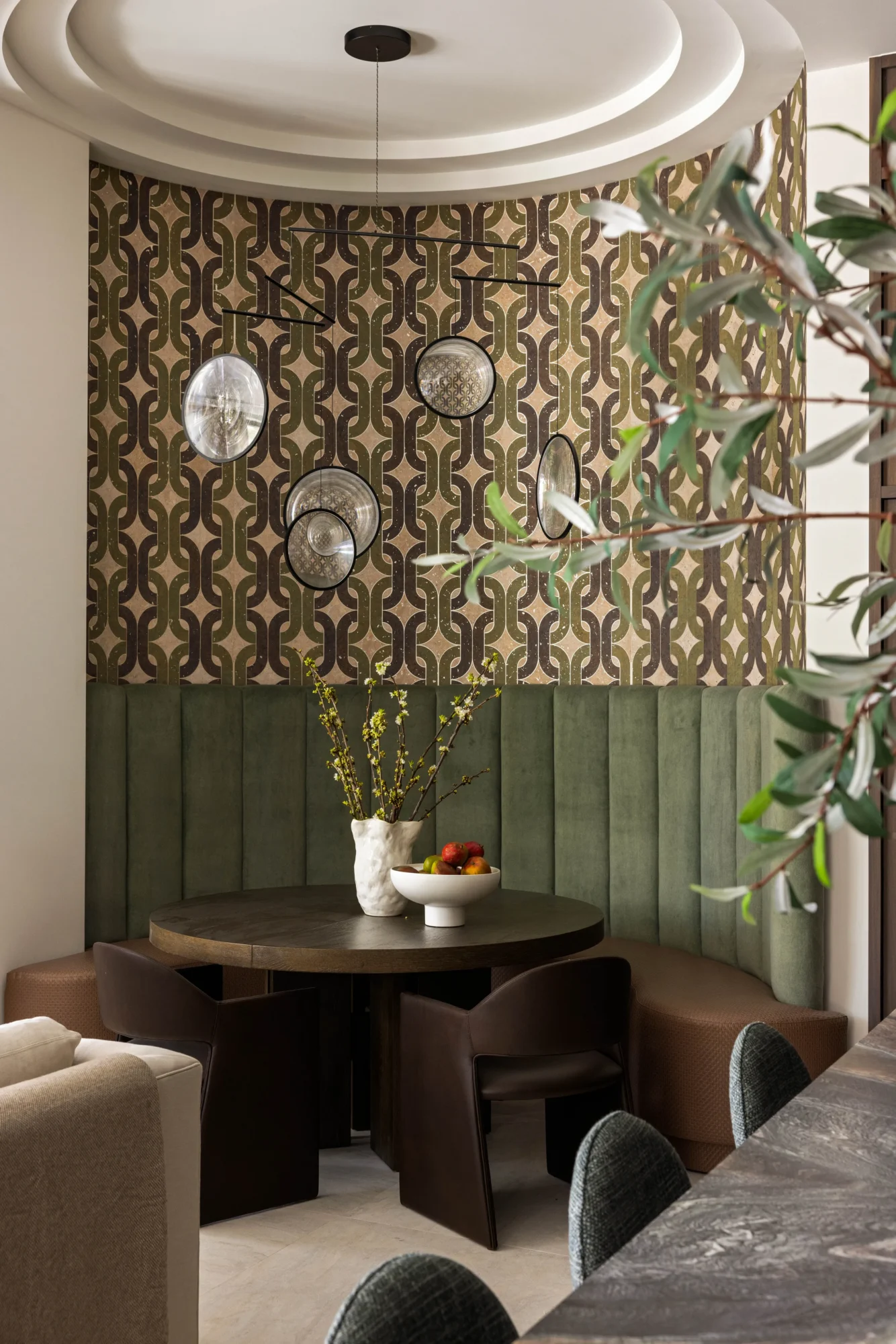
A chic rounded banquette offers additional seating in the kitchen
3. Echo Materials and Details with Intention
The materials woven into a home’s construction, such as limestone, organic wood, wrought iron, or marble, are a gift to the designer. They establish a palette that is already authentic to the place. Our interior design approach echoes these materials throughout the interior, rather than matching them.
The finest details are often the most subtle ones. A residence defined by black steel window frames might find its counterpoint in slender metal accents on a cocktail table. These quiet repetitions create visual threads that tie rooms together and make the home feel conceived as a whole.
The most coveted interiors show material restraint—each surface tells a purposeful story rather than competing for attention.
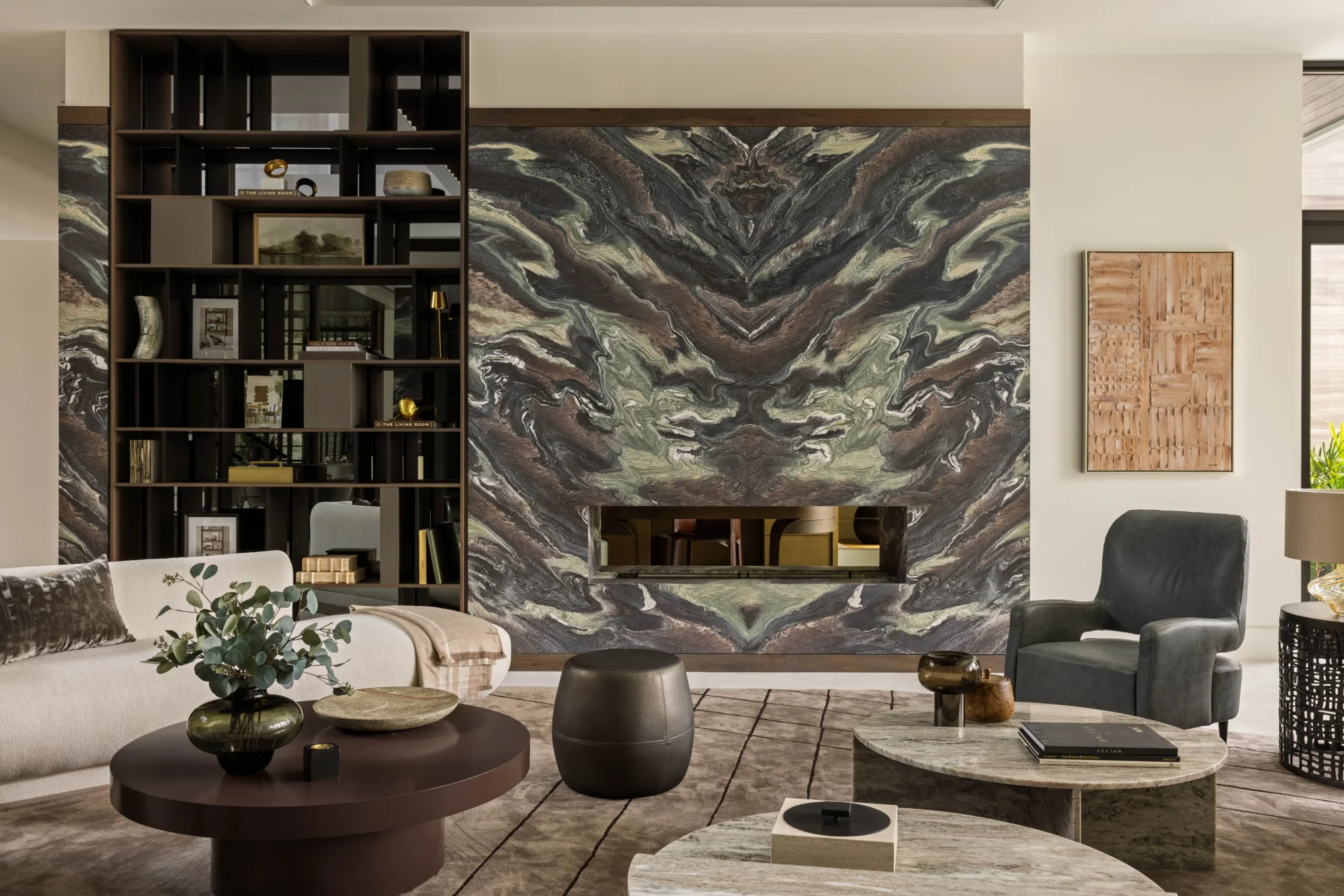
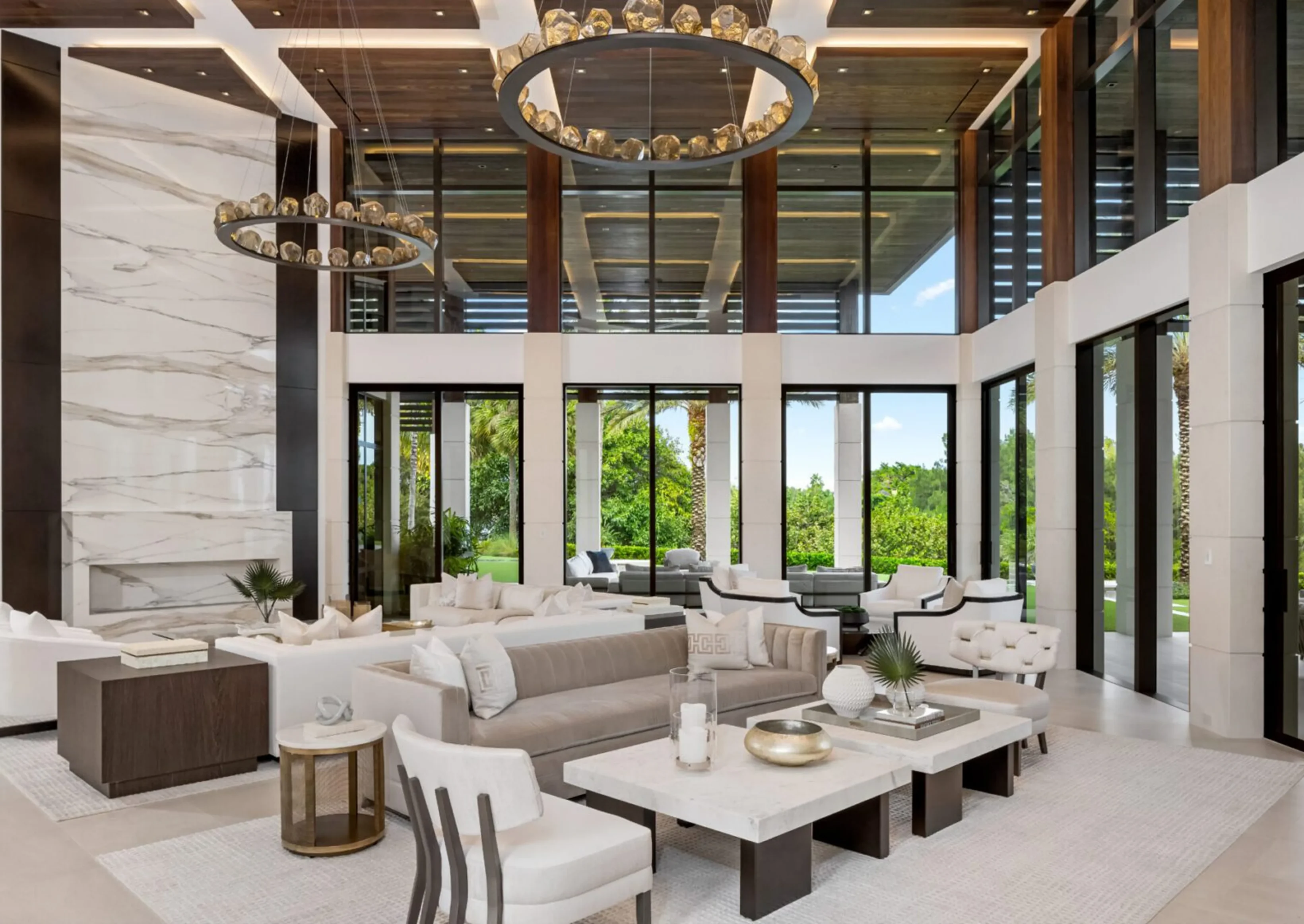
A marble fireplace anchors the expansive living room
4. Frame the Views and Embrace the Light
Windows are among architecture’s most expressive features, and the interior should celebrate them. Consider how each room relates to the landscape beyond: a sweeping ocean horizon, a manicured golf course, a canopy of mature trees. Arrange furniture to draw the eye outward, and choose window treatments that enhance the view rather than obscure it.
Light itself is a design material. North-facing rooms benefit from warmer tones and richly layered textures, while sun-drenched spaces can carry deeper, more saturated colors without feeling heavy.
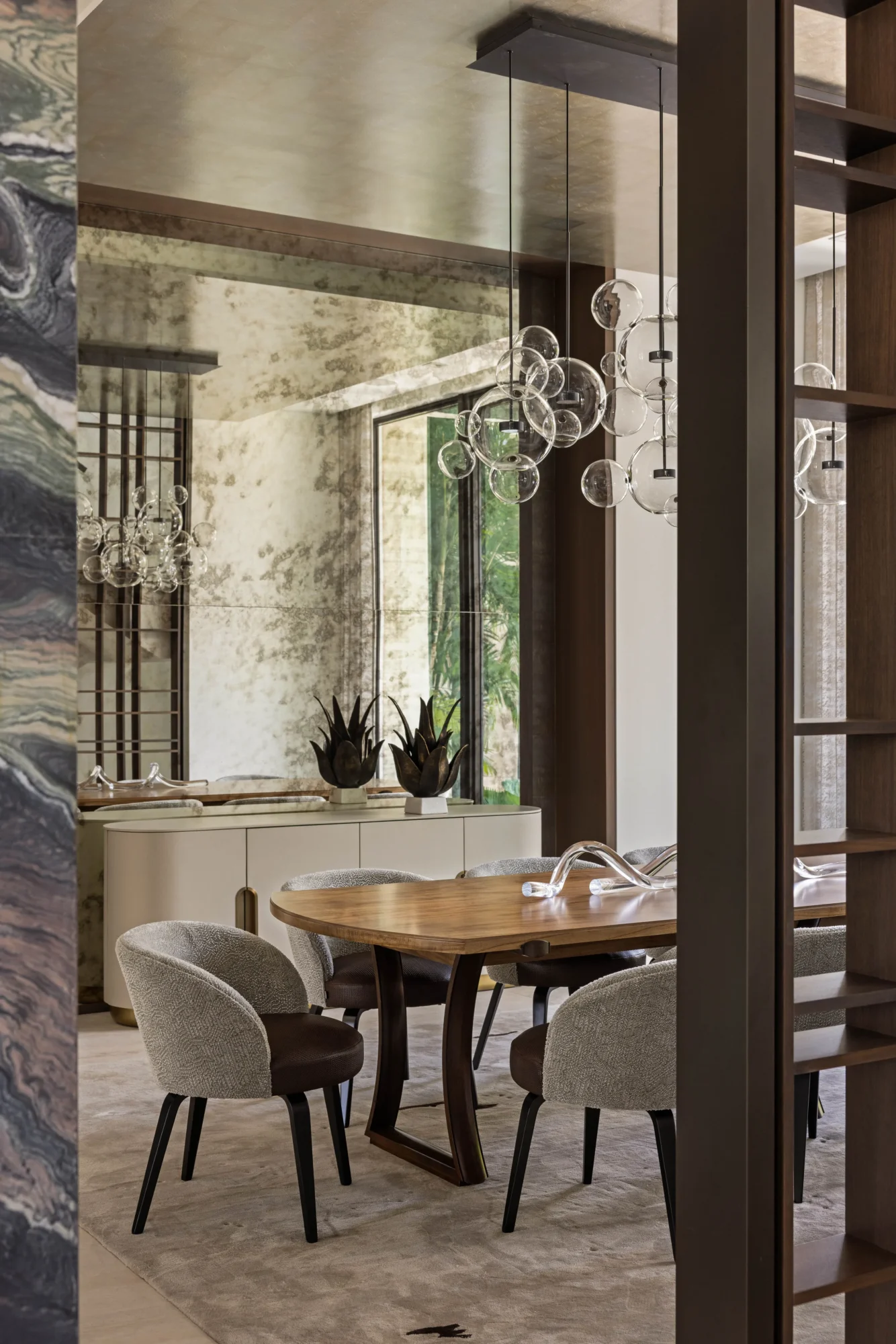
A wall of antiqued mirror reflects light in the dining room
5. Create Flow and Continuity
A well-designed home unfolds like a story, with each room distinct yet clearly part of the same narrative. Architecture establishes this sequence through thresholds, corridors, and transitions, and the interior should reinforce it. We think carefully about the experience of moving through a home: what is revealed at the entry, how one space opens into the next, and where the eye comes to rest.
Continuity does not require uniformity. Rather than repeating the same look in every room, we establish a consistent thread, whether a restrained color story, a recurring material, or a shared sensibility in the art and objects, and allow each space to express its own personality within that framework. The result is a residence that feels layered, curated, and deeply personal, never themed.
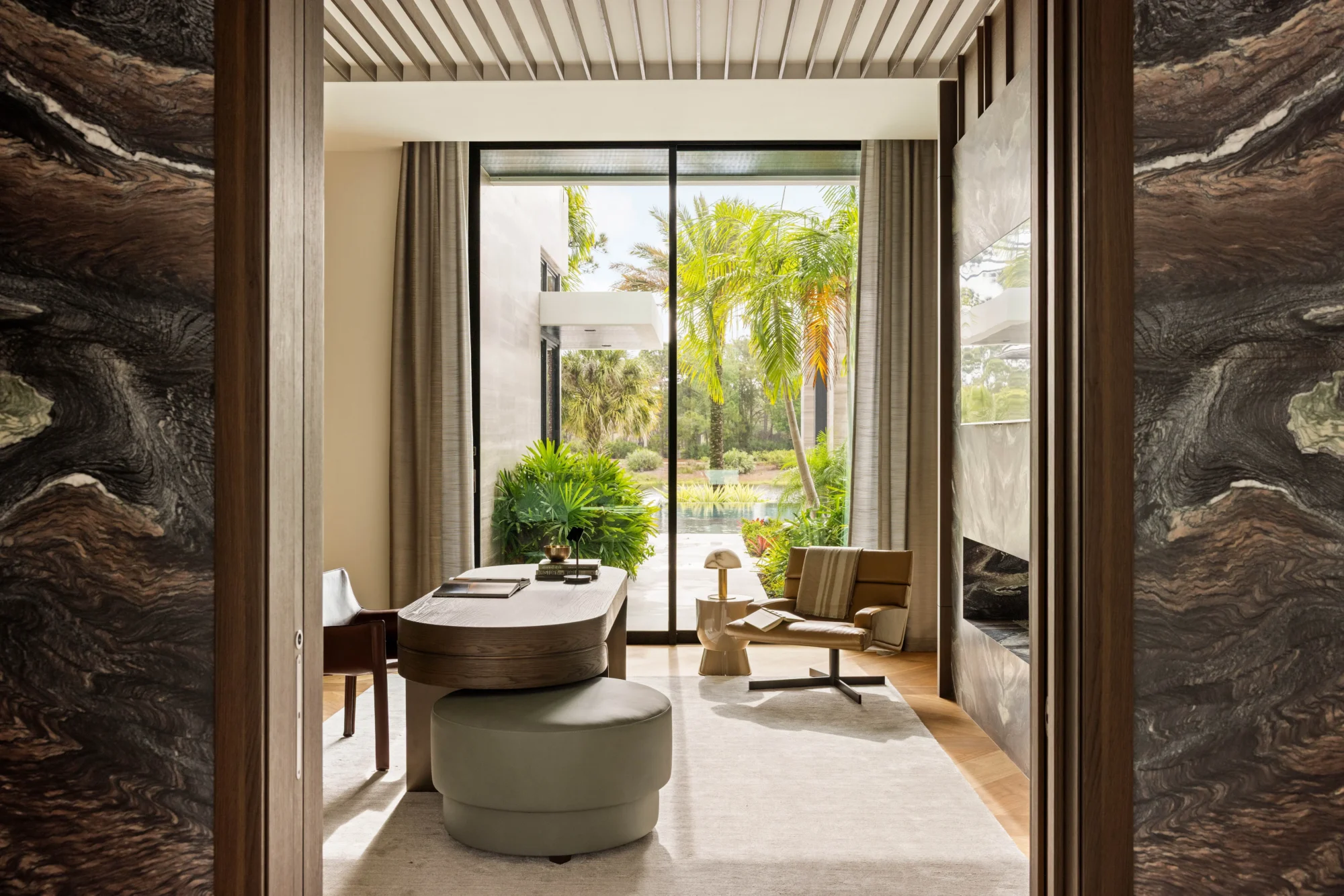
The marble flows throughout the home, including in this stylish home office
The Inside Scoop: Understanding the Architectural Vision
This custom estate in the Bears Club was built for resort-style living. Floor-to-ceiling glass walls and a sweeping floor plan dissolve the boundary between indoors and outdoors. Rather than imposing a predetermined aesthetic, we listened to what the architecture was already saying.
When interiors are designed in conversation with architecture, something remarkable happens. The home feels considered, with every element belonging, and nothing feeling forced.
When every material, color, and furnishing choice strengthens the home’s architectural intention, the interiors become timeless.
The Inside Scoop on How Luxury Interior Design Complements Architecture.
Read on for a Q & A with Senior Interior Designer at The Decorators Unlimited, Jack Lonetto:
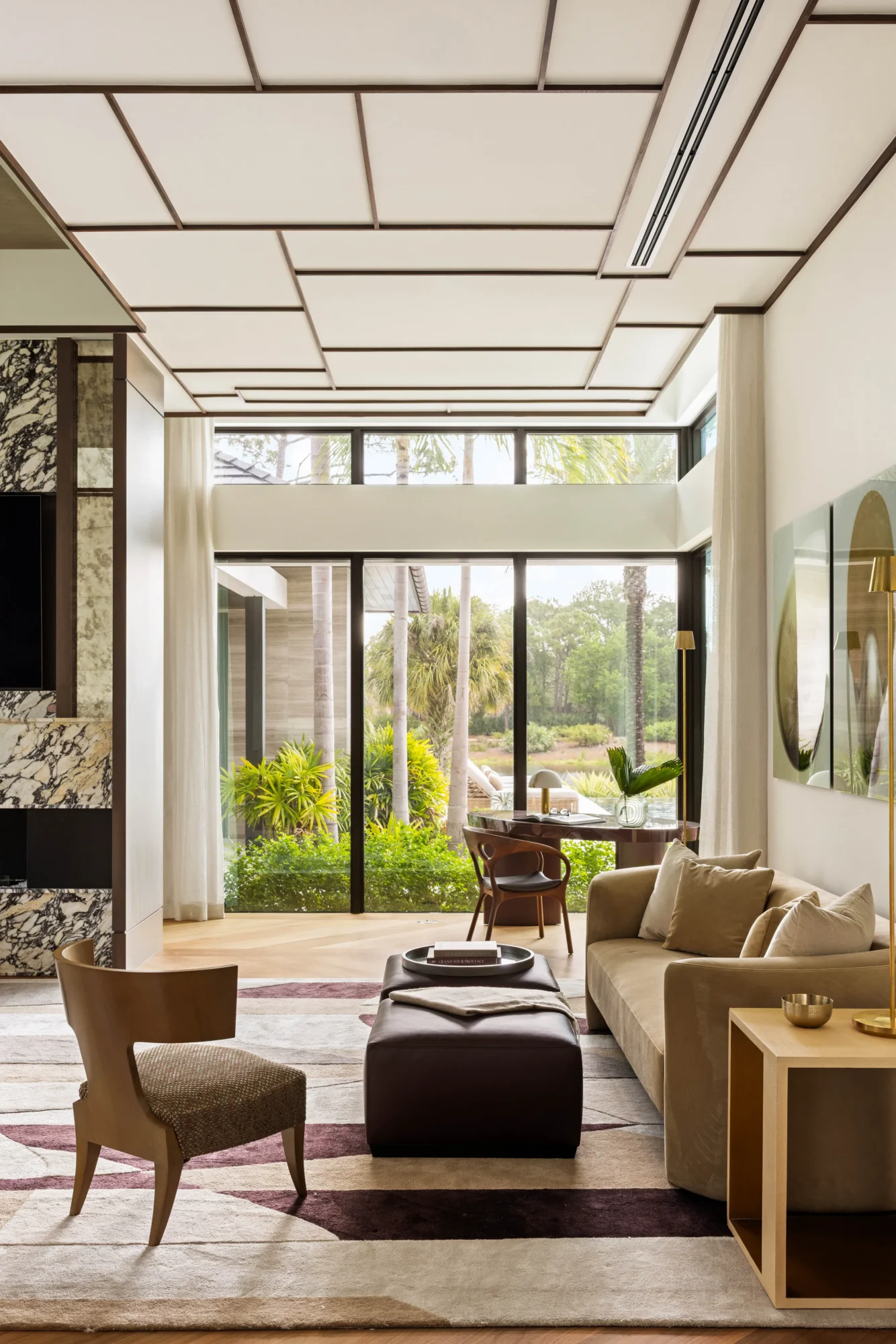
A custom ceiling detail in the primary suite
Q: The interiors feel deeply connected to the home’s architecture. How did the architectural design influence your overall creative direction for this project?
A: Architecture is always my starting point when approaching a residential project because it establishes the language and tone for everything that follows. As a former architect, I understand the importance of carrying that language into the interiors to create a cohesive experience throughout the home.
This architecture felt grounded, substantial, and permanent, and I wanted the interiors to evoke those same qualities. We therefore prioritized authentic, natural materials—including real wood, stone, and metal—to give the home warmth, depth, and lasting quality.
Q: What story do you believe the interiors tell about modern luxury living?
A: I believe these interiors demonstrate that modern design need not feel cold, colorless, or transient. We used distinctive materials thoughtfully to communicate warmth, luxury, and permanence. To me, modern luxury should feel elevated and beautifully crafted, but also grounded, personal, and built to last.
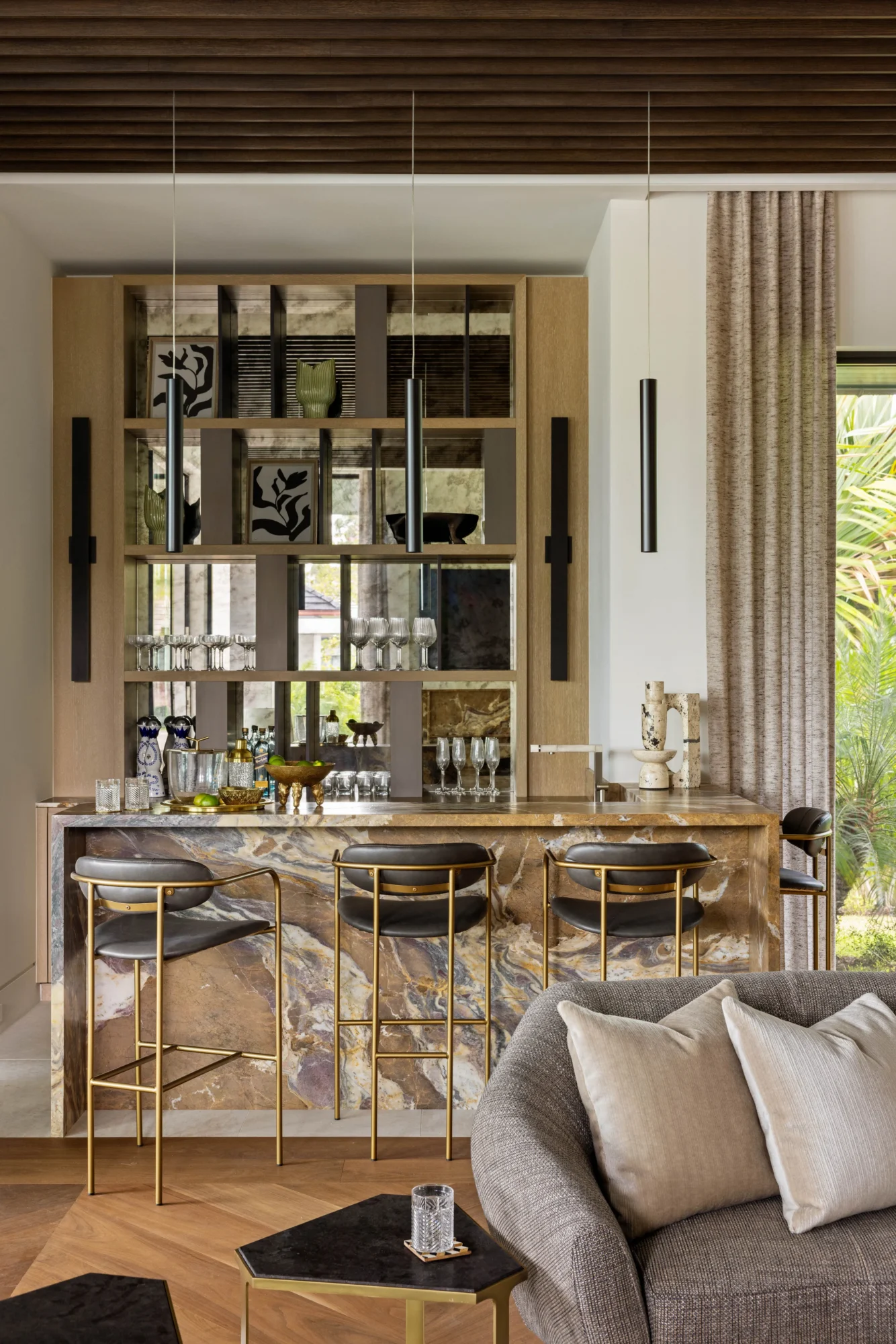
A masterful mix of materials was used to design the bespoke bar
Q: What were the first architectural elements you noticed, and how did those details shape the interior palette and materials?
A: Even during preconstruction, I was immediately drawn to the sharp rooflines and substantial overhangs. I loved that the home would not be another standard modern box. The architects’ renderings inspired our material selections, but we took them in a slightly darker, moodier direction. We wanted the house to feel distinctive, grounded, and in harmony with its natural surroundings.
Q: The material selections feel layered yet restrained. Can you talk about the importance of texture and finishes in creating luxury without excess?
A: For me, layering creates interest, intimacy, and richness without relying on excess. It can subtly alter the perception of scale, helping expansive spaces feel more comfortable and personal. Texture and finish also create depth where there may otherwise be none, giving a room a sense of character and quiet luxury
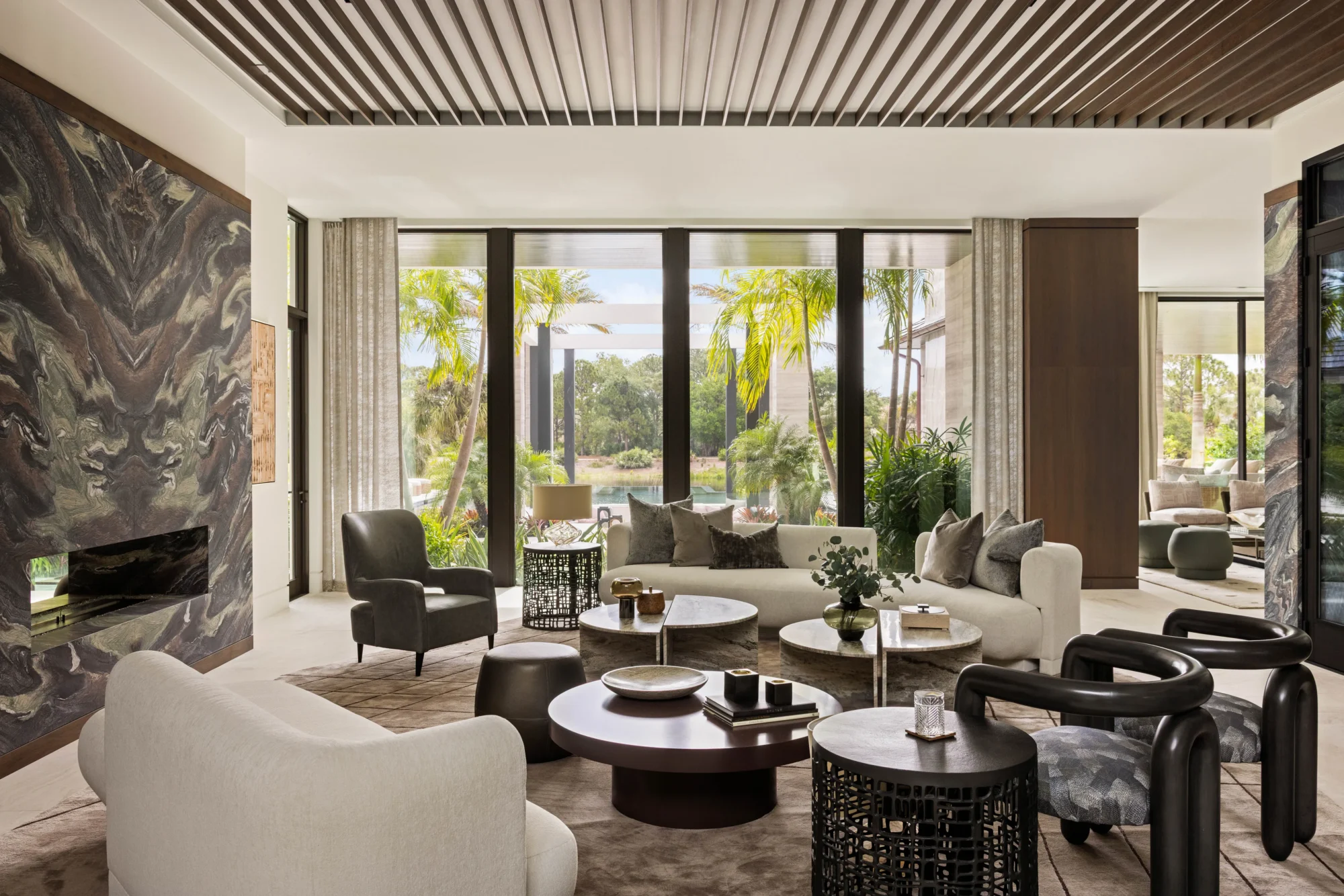
A thoughtful seating plan allows for intimate gatherings in the expansive living room
Q: This home balances grandeur, livability, and warmth exceptionally well. What design strategies did you use to make large-scale spaces feel intimate and livable?
A: Layers—lots of layers. We layered materials, patterns, textures, and color to create warmth and visual interest. Large-volume spaces can easily feel cold or uninviting, so elements such as wood ceiling treatments and perforated screen walls helped scale things down and add intimacy.
Those details also influence how the home is experienced throughout the day: how sound is absorbed and reflected, and how shifting light creates changing shadow patterns. Color was another important layer. We drew inspiration from the beautiful Cipollino Ondulato marble, using its green, beige, mauve, and plum tones as a palette throughout the house.
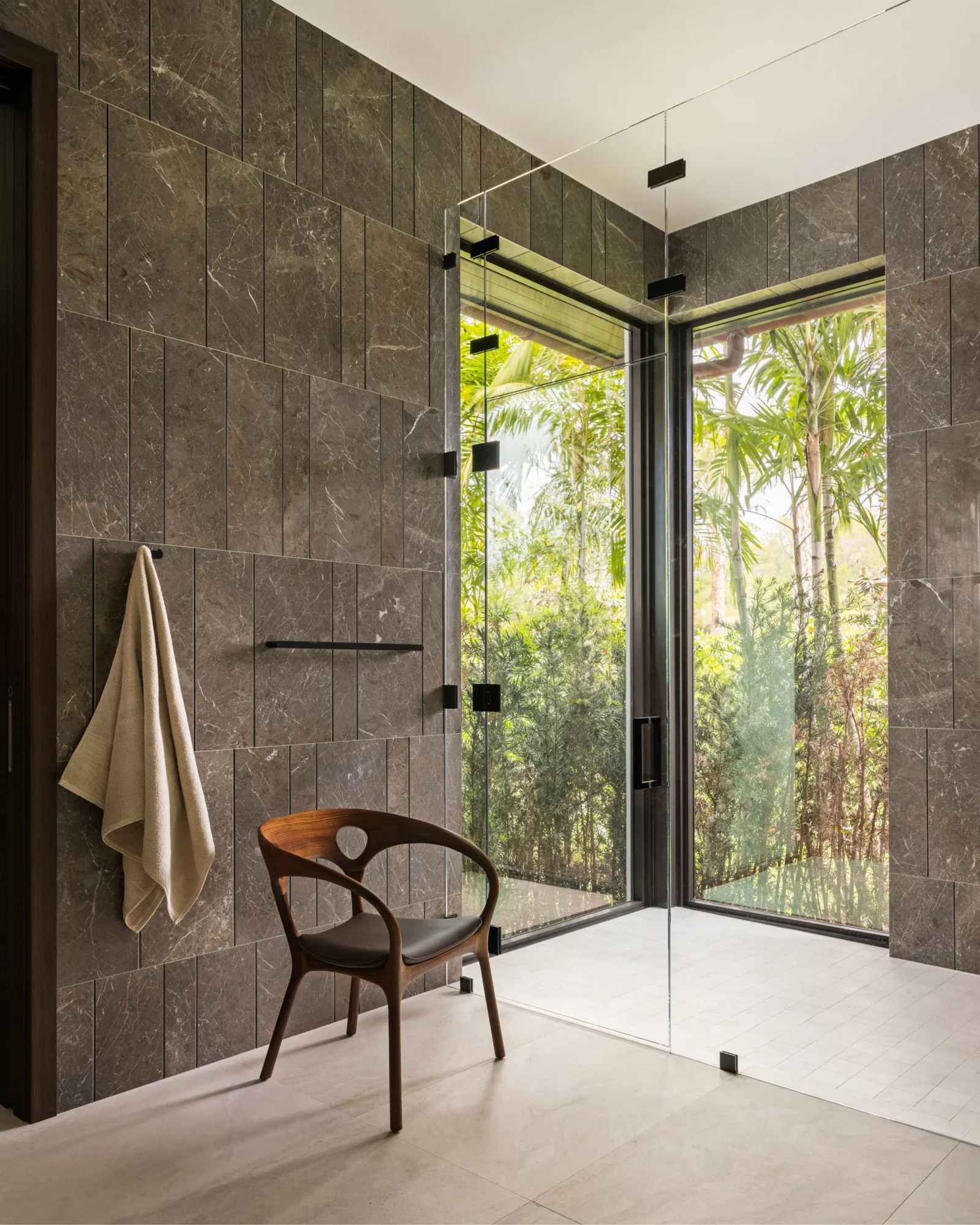
Style & function intersect in the primary suite
Q: Do you have a source of inspiration that would surprise us?
A: I’m not sure it would surprise anyone who knows my work, but I’m deeply influenced by architects such as Frank Lloyd Wright, Charles Rennie Mackintosh, Philip Johnson, and the Bauhaus architects.
At first glance, those influences may seem very left-brain/right-brain, but they share a strong belief in form following function. Their use of materials as decoration—beautiful stone, elegant wood, and thoughtful craftsmanship—is also central to my own design philosophy.
Q: Tell us your design philosophy in one sentence (or 3 words?).
Cliché but… form follows function
Q: What was the most challenging aspect of designing this residence?
A: The greatest challenge was designing the residence as a speculative project. We needed interiors that reflected the home’s architectural character without becoming so personalized or literal that they would appeal only to a narrow audience.
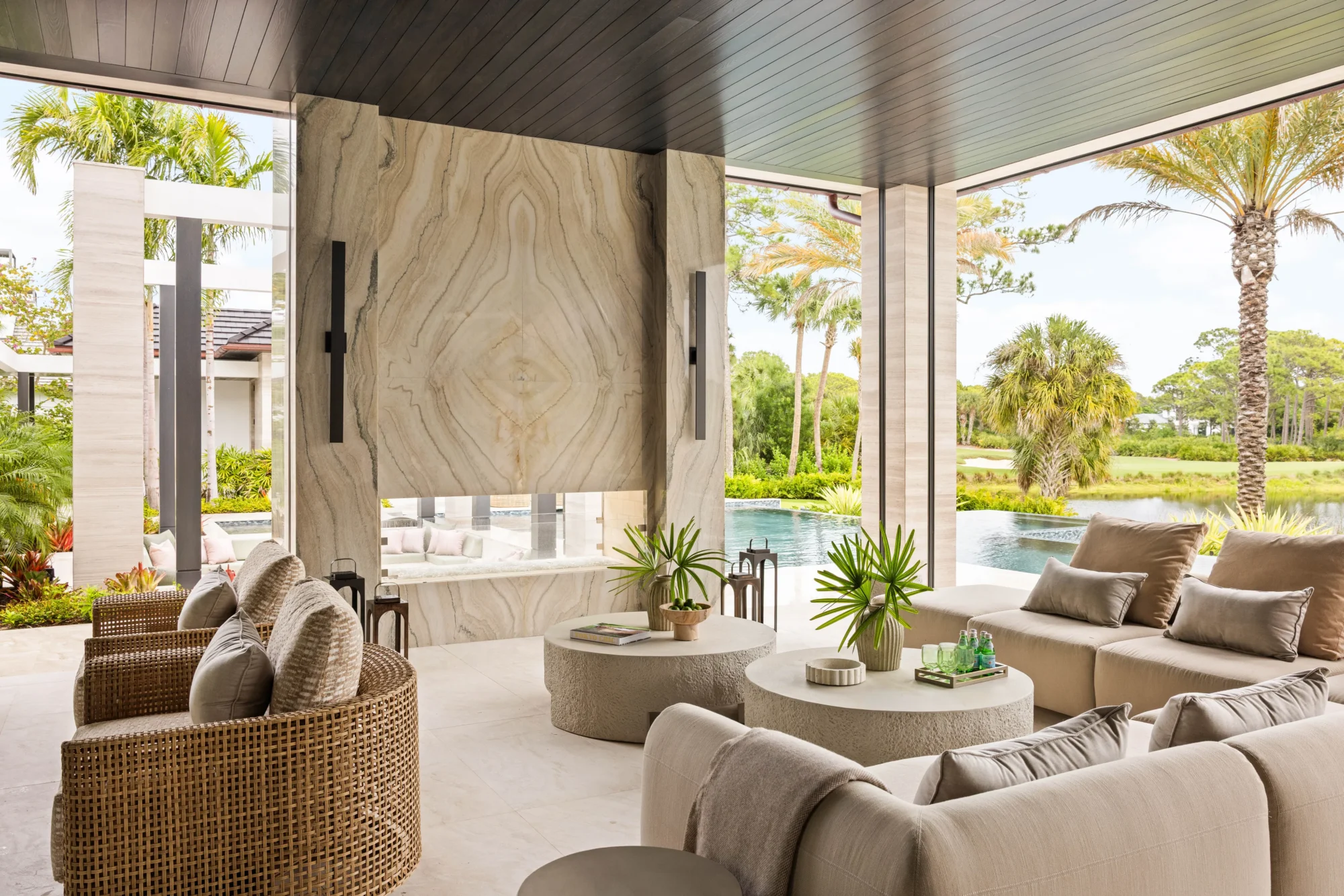
An outdoor living space with layers of tonal texture
Q: Indoor-outdoor living is central to the lifestyle in The Bear’s Club. How did you ensure the interiors felt connected to the surrounding landscape and environment?
A: One of my guiding design principles is that the design aesthetic should remain consistent throughout a home. The architecture and exterior environment should influence the interiors, and vice versa.
I wanted the outdoor spaces to feel like a natural continuation of the interior design. Drawing the eye outward visually extends the rooms, making the interiors feel more open and uninterrupted. We used a related color palette—often in lighter variations—and maintained continuity in the furnishings and overall design language. Together, those choices help blur the distinction between inside and out.
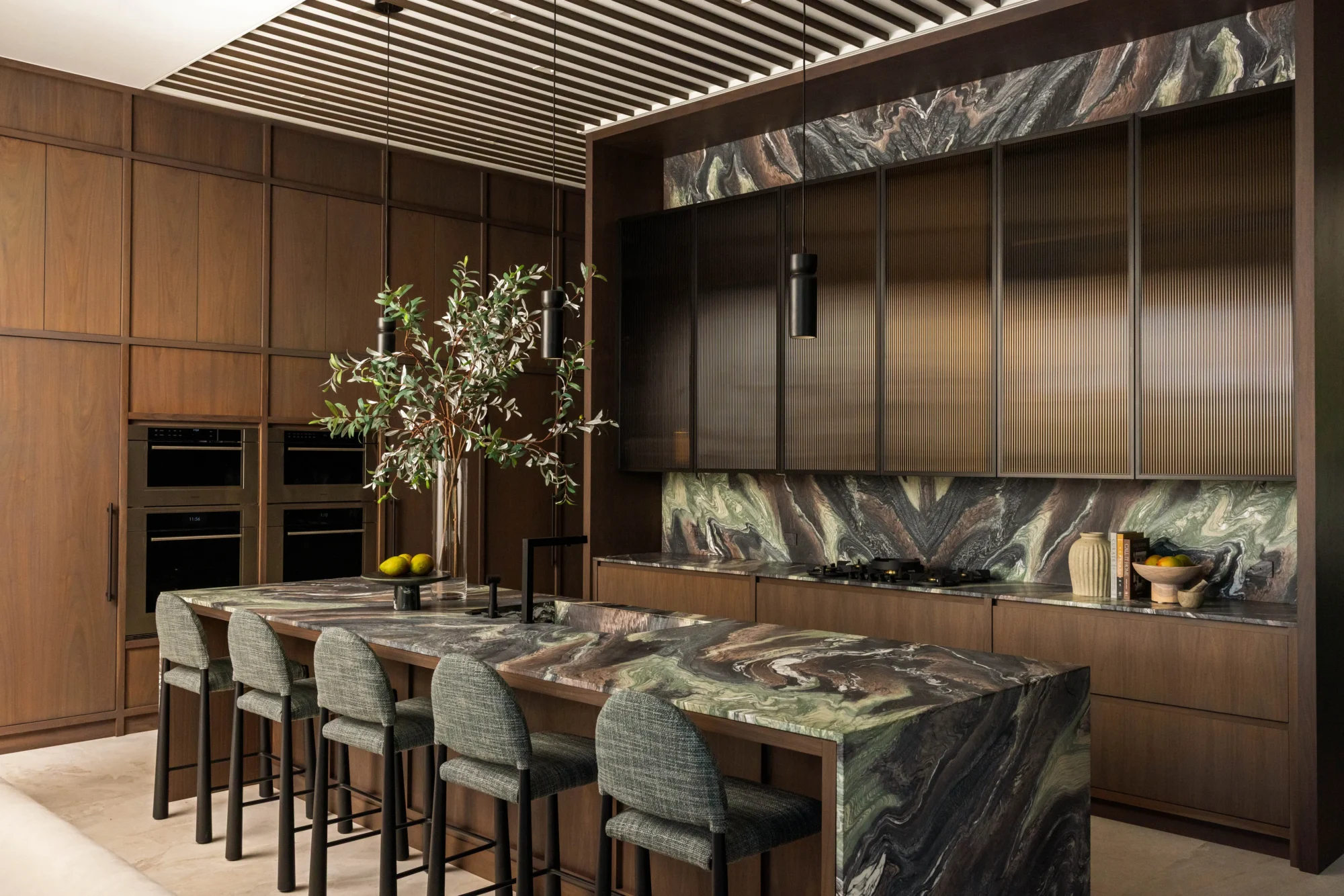
The kitchen is a statement in material restraint
Q: Let’s talk about all things custom. Which custom furnishings, architectural details, or artisan collaborations in this home became defining moments for the design?
A: Whenever possible, I like to bring something personal and original into the environments I design. This project let me incorporate several of my own creative works, including original art, wallpaper, and rug designs. Those custom elements made the home feel especially personal and became an important part of its identity.
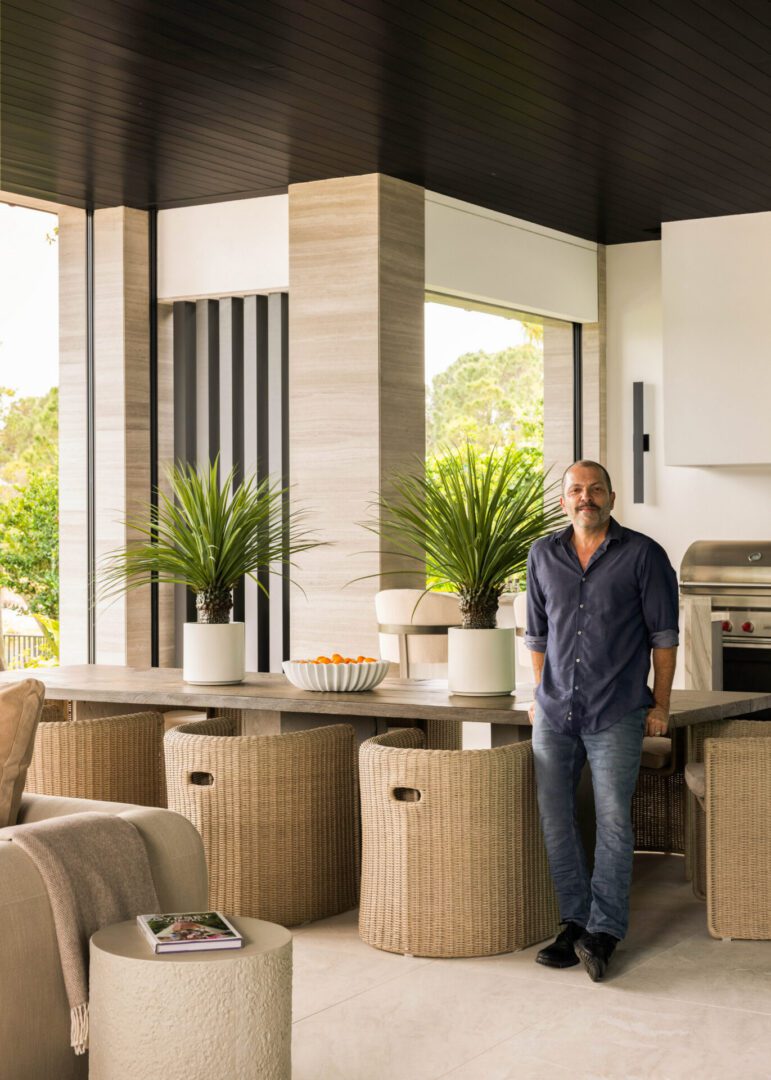
The designer, Jack Lonetto of The Decorators Unlimited
Meet the Designer
With a background in architecture (and as a classically trained pastry chef!), Jack Lonetto, Senior Interior Designer at The Decorators Unlimited, brings a quiet sophistication to every interior design project he helms. Jack designed this Bears Club residence with quiet restraint and bespoke luxury at every turn.
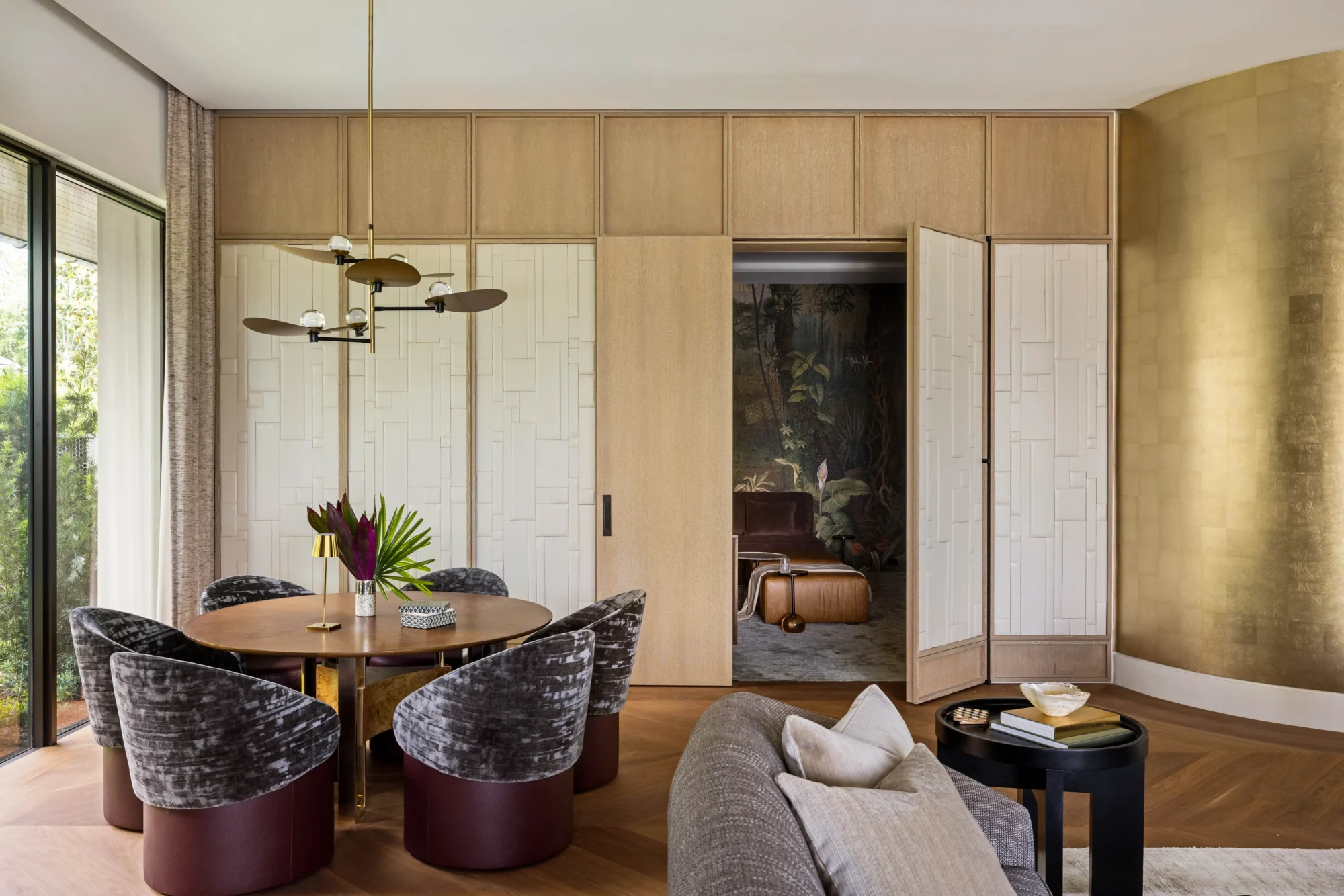
A home theater tucked away behind a custom leather-upholstered wall
Our Firm: Designing Luxury Interiors That Complement Modern Architecture
Interior design that commands attention feels like an extension of the architecture. The furnishings, finishes, and fixtures feel predetermined by the structure itself. This level of luxury interior design is earned from disciplined restraint, material honesty, and deep respect for architectural character.
If you’re seeking an interior design firm that understands how architecture and interiors work in perfect harmony, reach out to us.
If you are starting a new build, undertaking a renovation, or simply seeking to realize your home’s full potential, we would be delighted to hear about it. Contact The Decorators Unlimited to schedule a private consultation and discover how thoughtful design can bring your home’s architecture to life.
Please call Jason Lynn at 561.215.7615 or visit The Decorators Unlimited